Photographing the Full Moon Rising: Planning With Azimuth and Timing
The giant moon behind a lighthouse is not luck. It is a date, a direction, a distance, and a few minutes of light, all worked out before you leave home.
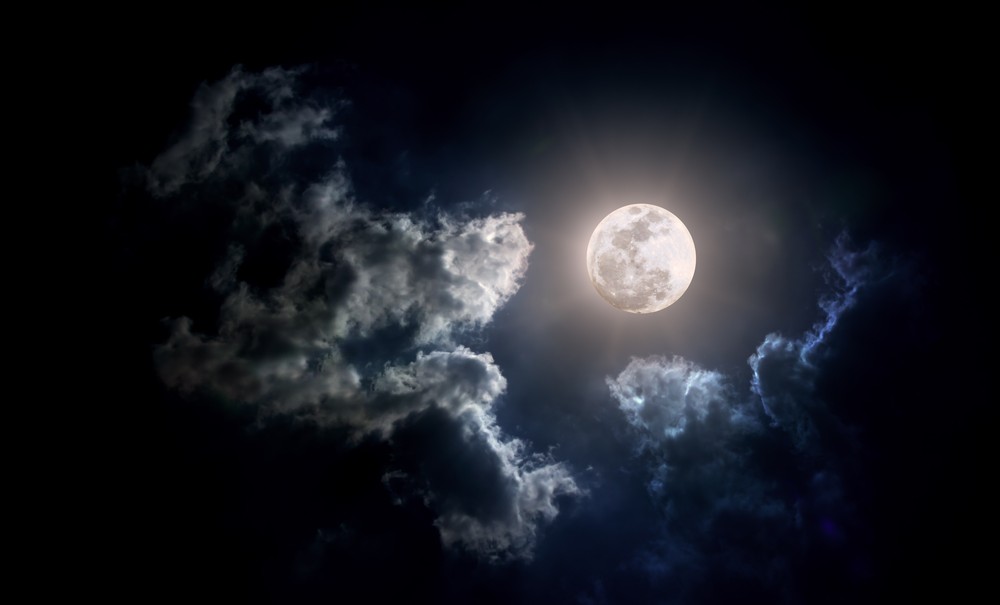
The secret to photographing the full moon rising is to shoot the evening when the moon clears the horizon shortly before or around sunset, so the landscape still has light; to know the moonrise azimuth so you can line it up behind your subject; and to stand far enough back with a long lens that the moon looks large against the scene. Usually that best evening is the day before the exact full moon, not the day of.
Here is the planning process step by step, with real 2026 numbers.
Step 1: pick the right evening
The full moon instant is a single moment in time. What you care about is local moonrise relative to local sunset.
- Moon rises before sunset: ideal. The foreground is lit by low, warm sunlight, and the moon is bright but not overpowering. You can capture detail in both in one frame.
- Moon rises within about 15 minutes after sunset: still very good. The sky is in civil twilight and the moon glows against a deepening blue.
- Moon rises an hour or more after sunset: difficult. The landscape is dark and the moon is far brighter than anything around it.
Some computed 2026 examples:
| Location and date | Moonrise | Sunset | Verdict |
|---|---|---|---|
| New York, 26 Sep (Harvest Moon) | 6:34 p.m. EDT | 6:46 p.m. | Excellent |
| New York, 25 Oct (eve of Hunter's Moon) | 5:26 p.m. EDT | 6:01 p.m. | Excellent |
| New York, 24 Nov (supermoon) | 4:15 p.m. EST | 4:31 p.m. | Excellent |
| New York, 23 Dec (supermoon) | 3:58 p.m. EST | 4:32 p.m. | Excellent |
| London, 24 Nov (supermoon) | 3:17 p.m. GMT | 4:00 p.m. | Excellent |
| London, 24 Dec (supermoon) | 4:07 p.m. GMT | 3:55 p.m. | Good |
Check both the evening before and the evening of the full moon for your location; the moon page for your city lists both. Try San Francisco moon times or Cardiff moonrise and moonset. The 2027 full moon list tells you which weeks to look at.
Step 2: find the moonrise azimuth
Azimuth is the compass direction of moonrise, measured in degrees clockwise from true north (90° is due east). The full moon rises roughly opposite the setting sun, so a quick estimate is the sunset azimuth minus 180°. Because the moon's orbit is tilted about 5 degrees to the ecliptic, the real moonrise point can sit several degrees either side of that estimate, so always confirm with a planning tool before committing.
Seasonal rules of thumb for mid-northern latitudes:
- Winter full moons rise well north of east. In New York in late December the sun sets at around 239° (southwest), so the full moon rises somewhere around northeast.
- Summer full moons rise south of east and stay low.
- Equinox full moons rise close to due east.
Southern Hemisphere photographers reverse the north-south parts. Remember that compasses point to magnetic north, which can differ from true north by more than ten degrees in parts of North America and New Zealand.
Step 3: choose your distance
The moon always spans about half a degree of sky. To make it look big next to a building or tree, you need to stand far away from that subject and use a long lens, so the subject shrinks to match the moon. This is the whole trick behind those dramatic compressed shots.
The focal length rule of thumb
On any camera, the moon's image on the sensor is roughly its focal length divided by 110. With a 200 mm lens the moon is about 1.8 mm across; at 600 mm it is about 5.5 mm. On a full-frame sensor 36 mm wide, a 600 mm moon fills roughly a sixth of the frame width.
Matching subject and distance
Because the moon covers about 0.5 degrees, an object will appear the same width as the moon when you stand roughly 110 times its width away. A 10-meter-wide church tower matches the moon from about 1.1 km; a 50-meter lighthouse needs about 5.5 km. Halve those distances and the subject looks twice the moon's width.
Step 4: be in place early
- Arrive 30 minutes before moonrise to set up and confirm the line.
- Add time for terrain. If there are hills behind your subject, the moon will appear later than the listed moonrise.
- The moon moves its own diameter in roughly two minutes. Your alignment window behind a narrow subject is brief, so be ready to move a few steps sideways to keep it in place as it climbs.
- Low-horizon haze often hides the first minutes of moonrise. Do not leave early because you cannot see it right away.
Step 5: expose for the moon
At moonrise in daylight, the scene and moon may both fit in one exposure. As the sky darkens, the moon quickly becomes far brighter than the landscape.
- Starting point for a high full moon: f/11 at a shutter speed of 1/ISO (for example f/11, 1/100 s at ISO 100). A rising moon dimmed by the atmosphere needs one to three stops more.
- Use a tripod and remote release. At long focal lengths, even slight shake blurs detail.
- Keep shutter speeds short, around 1/125 s or faster at 400 mm or longer, so the moon's motion does not smear.
- Bracket as light changes, and consider blending two exposures if the landscape goes dark.
For the warm light on your foreground, pair this with your city's golden hour page, such as golden hour in New York City.
Frequently asked questions
Is the best full moon photo on the night of the full moon?
Often not. The evening before usually has moonrise before sunset, so the landscape is still lit. On the night itself the moon may rise after sunset, against a darker sky.
Why does the moon look so big in some photos?
The photographer stood far from the foreground subject and used a long telephoto lens, which makes the subject small enough to match the moon's fixed half-degree size.
What lens do I need to photograph a big moonrise?
Anything from about 200 mm upward works for landscapes; 400 to 600 mm gives the classic oversized moon. Shorter lenses are better for wide scenes where the moon is an accent. Our article on supermoons explains why a perigee full moon adds only a little extra size.